Dispatch and route status
Review active routes, planned stops, delayed handoffs, dispatch queues, and priority exceptions from a shared view.

LOGISTICS AND FLEET OPERATIONS
Shared operational context for dispatch, routes, vehicles, deliveries, inventory movement, and service-impacting exceptions.
PulseBoard helps logistics and fleet teams bring transportation, dispatch, warehouse, service, and operations signals into managed dashboard views. Teams can review route status, vehicle availability, delivery exceptions, source freshness, and follow-up work from a shared operational context.
Logistics teams often work across dispatch tools, vehicle records, warehouse systems, inventory files, service tickets, and customer-facing commitments. PulseBoard can help organize these signals into prepared operational views so teams can review exceptions, source status, and follow-up work without depending on disconnected reports.
Logistics telemetry views
PulseBoard views can be prepared around the operating signals logistics teams already review: routes on time, vehicle readiness, delivery exceptions, inventory constraints, follow-ups, route pressure, maintenance holds, customer impact, and source freshness.
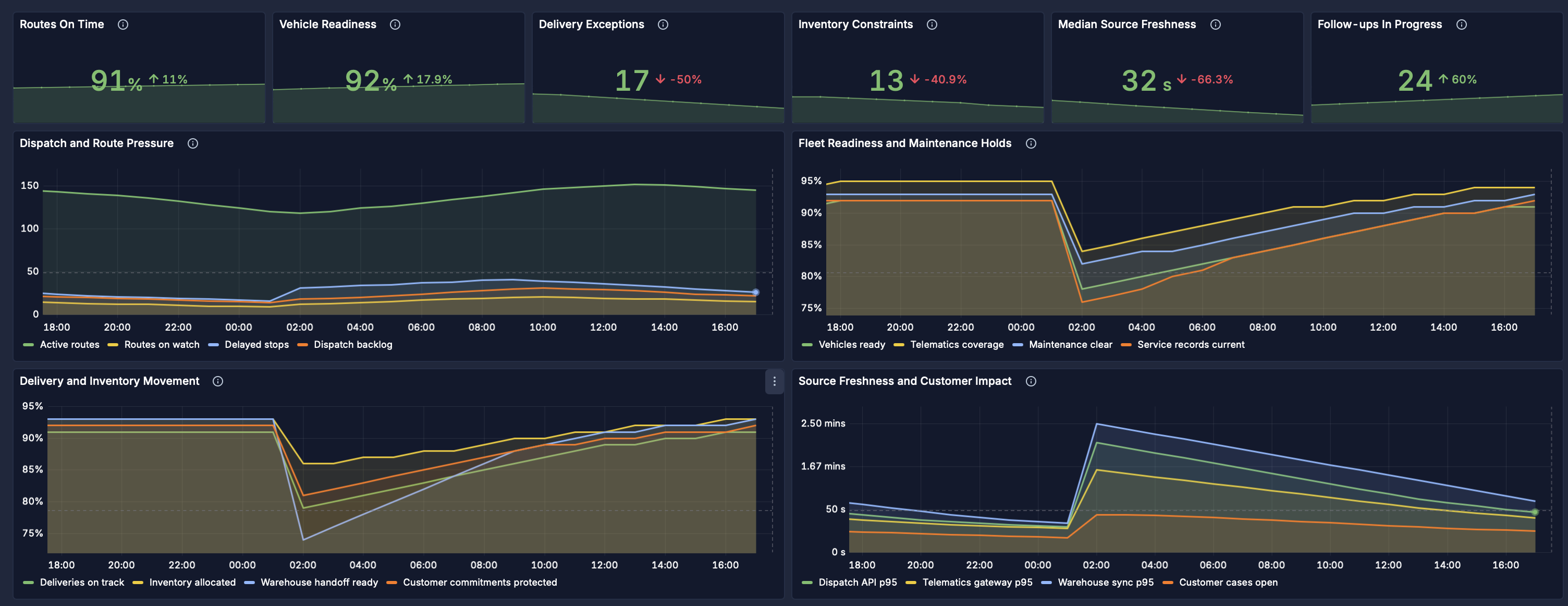
Review route timeliness, vehicle readiness, delivery exceptions, inventory constraints, source freshness, follow-up load, dispatch pressure, fleet maintenance holds, delivery movement, and customer-impacting signals from one operating view.
When route pressure, maintenance holds, inventory constraints, or source freshness shifts, teams can compare dispatch, fleet, warehouse, and customer-impacting context before assigning follow-up.
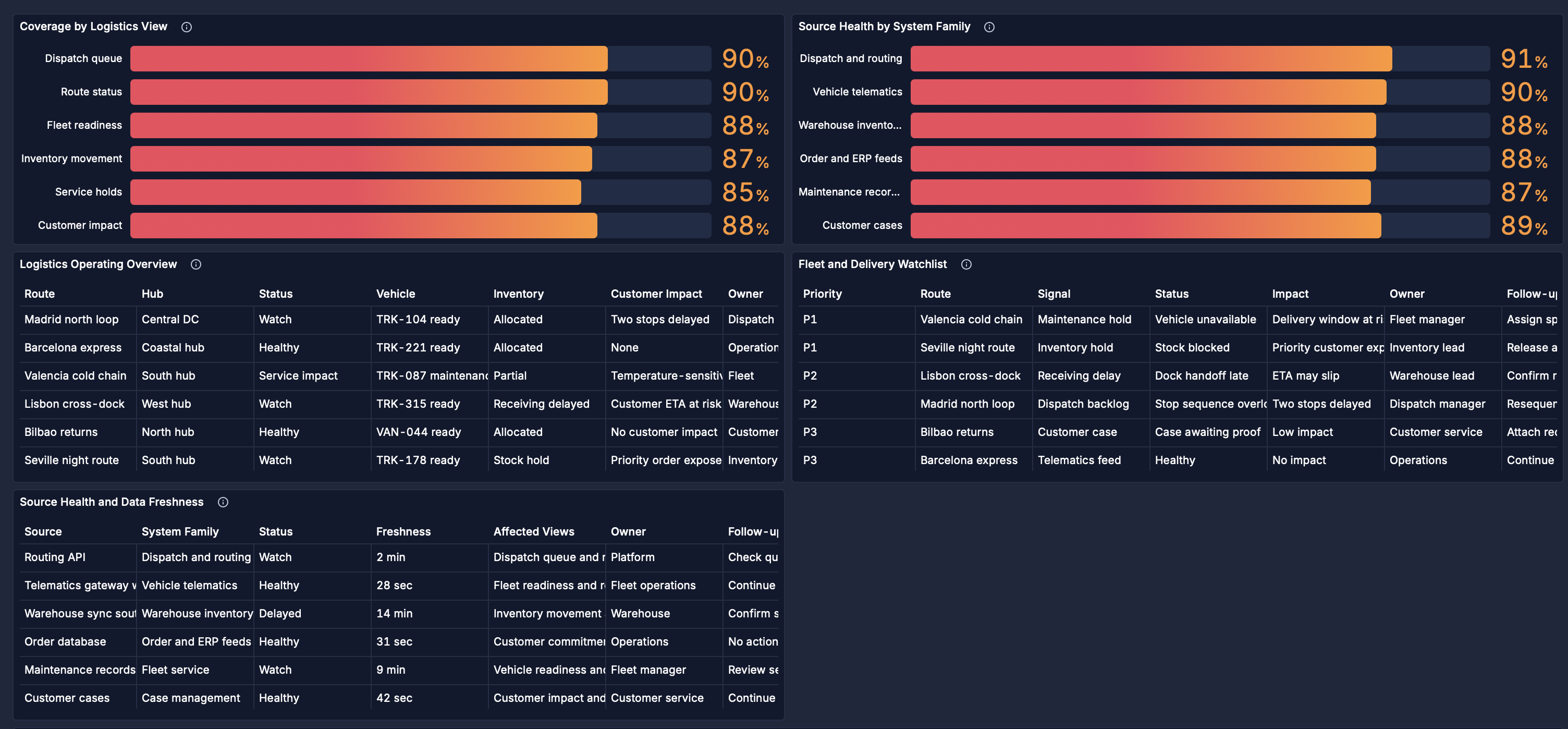
Pair coverage by logistics view, source health by system family, operating overview, fleet and delivery watchlists, and freshness tables for coordinated logistics review.
Review active routes, planned stops, delayed handoffs, dispatch queues, and priority exceptions from a shared view.
Track vehicle readiness, assigned work, maintenance holds, service exceptions, and operating constraints in the same operational context.
Connect inventory availability, dispatch status, delivery progress, receiving exceptions, and customer-impacting follow-ups.
Review whether the operational views are supported by current source data, healthy feeds, and available system signals.
Deployments depend on the systems available in each environment. Logistics and fleet views may include dispatch, routing, warehouse, inventory, service, customer, and telemetry-source signals.
Identify delayed routes, unavailable vehicles, stale source feeds, inventory constraints, and service-impacting exceptions.
Review route, vehicle, inventory, source-health, and customer-impacting context before assigning follow-up.
Keep dispatch, warehouse, maintenance, customer service, and operations teams aligned around the same customized views.
Review recurring exceptions, source gaps, route pressure, service delays, and operational handoff patterns.
Review active dispatch queues, route pressure, delivery exceptions, and follow-up status.
Review vehicle availability, maintenance holds, service status, and readiness signals.
Connect inventory availability, movement, receiving exceptions, and dispatch dependencies.
Review customer-impacting exceptions, delivery status, open cases, and escalation context.
Review logistics performance, source status, team workload, and priority operating risks.
A delivery exception appears in the operating view. The team checks the assigned vehicle, route status, warehouse handoff, inventory availability, source freshness, and related customer-service case before deciding the next follow-up. PulseBoard keeps the investigation grounded in the same operational context used by dispatch, warehouse, maintenance, and management.
Cogniaxiom can help identify the logistics, fleet, inventory, service, and source-health signals that should be represented in a managed PulseBoard operating view.